Operational ontology

Semantic ontologies show how everything is connected.

Affectli brings every asset, site, person, event and piece of work into one live model of your operation. Any data point can be pivoted with a click, so every decision starts from the full context.

ModelObjects, properties, links, actions
PivotAny data point, one click
ViewMap, graph, table, timeline
GovernBy classification and role
What an ontology is

Your operation, modelled in the words your teams already use.

An operational ontology is one live model of everything your organisation runs and does. Each real thing is an object, with properties (what is known about it), links (how it relates to other things) and actions (what people can do with it).

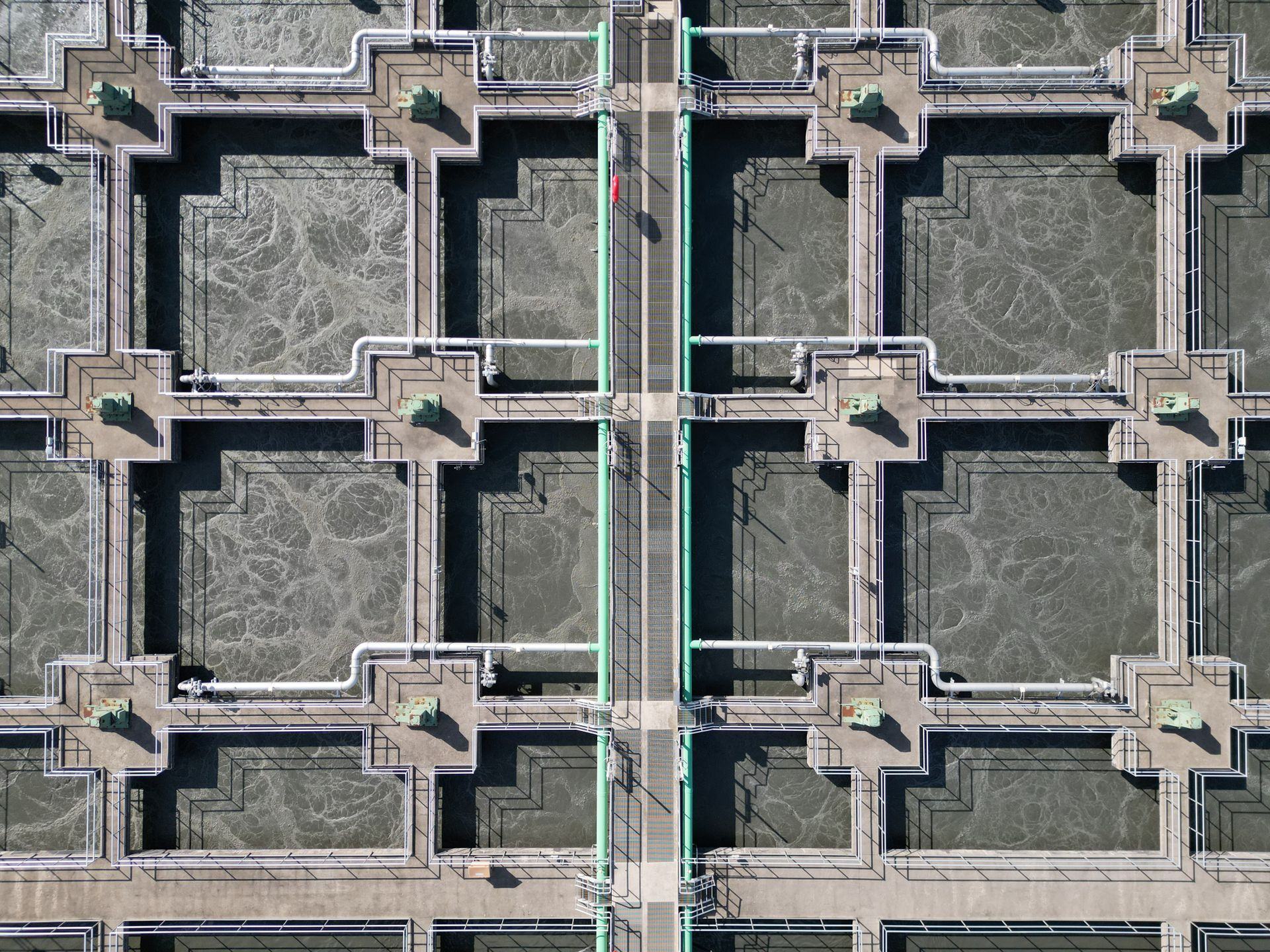
Aerial view of a water treatment works laid out as a grid of identical basins and channels Treatment works · aerialEvery basin is an object

Most operations already hold this knowledge. It sits in control-system (SCADA) tags, GIS maps, asset registers, ticket queues, spreadsheets and the memory of experienced staff, each with its own name for the same thing.

Affectli joins it into one live model that updates from the systems you already run. Every alarm then arrives with its asset, its site and its crew, and a question about one object is answered with the context of all of them.

Before · five systems, one reservoir 5 identifiers
SystemHow it knows the reservoir
SCADA / PLCRES14_LVL_PV
GISWTR-RSV-000014
Asset registerA-0040112
Ticketing"Hilltop Res." (free text)
SpreadsheetRow 214 · Hilltop SR
After · one object in the ontology Linked
[ Reservoir ]
RES-14 · Hilltop service reservoir
Level34 % · falling
Capacity8,000 m³
Linked objectsPS-07 · LT-14A · PIPE-3318
SourcesPLC · GIS · EAM · tickets · sheet
Question across systems

Which homes lose supply if PS-07 stays down for four more hours?

Pump StationReservoirDMAPremises
Question across systems

Which reservoirs will reach critical level before the morning peak?

ReservoirLevel SensorRule
Question across sectors

Which hospitals lose power, water or mobile coverage if substation SUB-0417 trips?

SubstationCritical EntityDependencyEssential Service
Anatomy of an object

Every object carries properties, links and actions.

Take one reservoir. Its type says what kind of thing it is. Events keep it current, and permissions decide who can see and act on it. Hover over a part to find it on the object.

Object type

The kind of thing

Reservoir, Pump Station, Engineer, Field Ticket. You define the types your operation needs, and every object of a type shares one structure.

Property

What is known about it

Level, capacity, inflow, pressure, install date. Values arrive from the systems that hold them, many of them live.

Link

How it relates

A pump station fills a reservoir. A ticket is assigned to an engineer. Follow any link to pivot from one data point to the next.

Object · RES-14 Falling--:--:-- UTC
Type
[ Reservoir ] · Water network › Storage
Hilltop service reservoir
Properties
Level34 % · 2.38 m
Volume2,720 of 8,000 m³
Inflow · outflow180 · 660 m³/h
Outlet pressure3.6 bar
Links
Linked objects
pumped by PS-07measured by LT-14Aoutlet PIPE-3318
Events
06:40Forecast: critical in 3 h 10 min
04:52PS-07 pump P2 tripped
Actions
Raise field ticket →Send level summary →Open digital twin →
Permissions
Control roomView · act
Pump vendor V-07Hidden
Action

What can be done to it

Raise a field ticket, send a summary, start a workflow built in Affectli Designer. Actions run from the object, so the work starts with its full context.

Event

What happens to it

Time-stamped occurrences from sensors, systems and people. The Mi-Stream engine applies rules, filters and integrity checks, then pushes events to the Events Monitor.

Permission

Who can see and act

Set by classification and role. A vendor can be limited to the assets it maintains while the control room sees the whole network.

Interactive explorer

Follow one falling reservoir through the ontology.

A pump trips in the early hours. By morning, the reservoir it fills is falling. Select any object to see its properties, the objects it links to and the actions it allows.

How the morning unfolds
  1. 01 · 04:52

    Pump P2 at PS-07 trips

    SCADA reports the trip. Inflow to RES-14 halves to 180 m³/h while morning demand starts to climb.

  2. 02 · 06:40

    The forecast fires three hours ahead

    A predictive rule on RES-14 projects consumption forward and finds the reservoir will reach 15 % at 09:50.

  3. 03 · 06:40

    A field ticket raises itself

    TKT-20931 is created against PS-07, with the asset, its history and its location attached, and assigned to ENG-112, 18 minutes away.

  4. 04 · 08:00

    The duty manager sees it on a phone

    The two-hourly level summary arrives with RES-14 flagged, so nobody has to ask for an update.

One model, many views

Visualised in multiple formats. Pivoted with a click.

Map, graph, table and timeline are four views of the same objects. There is one record underneath, so a level reading, a ticket or a status change shows up in every view at once.

Situational Awareness · Northern zone TripForecast--:--:-- UTC
Layers
Reservoirs 24
Water towers 9
Pump stations 18
DMAs 46
Trunk mains On
Engineers 14
Open tickets 6
Overlays
Pressure heat map
Rainfall radar
Selected · Reservoir
RES-14
Hilltop service reservoir
Forecast · critical at 09:5006:40 · low-level rule fired · TKT-20931
Level34 % ▼
Net flow−480 m³/h
Feeding pumpPS-07 · P2 tripped
Nearest engineerENG-112 · 18 min
Level · since midnight

Asset icons change colour on fault or alarm, and update as issues are resolved or escalated. Find the nearest qualified person and dispatch from the map.

Sample data
Classifications Manager · Northern zone 3 roots27 classes
Assets
Water network7,509
Storage33
Reservoir24
Water tower9
Pumping18
Pump station18
Distribution7,458
District metered area46
Pipe segment7,412
People
Employees118
Control room22
Field engineers96
Third parties58
Vendors17
Contractors41
Selected class
Storage
Parent · Water network
ChildrenReservoir · Water tower
Objects inheriting33
Shared propertiesCapacity · level · critical %
Access, inherited by all 33
Control roomView · act
Field engineersAssigned
VendorsContracted only
ContractorsHidden
Classifications Manager

One hierarchy decides who sees what.

The Classifications Manager holds profiles for people, assets, clients, vendors and tenants, organised with classifications and parent-child relationships. The same structure sets who can see and do what.

Set access once on Storage and every reservoir and water tower beneath it follows. A new reservoir inherits the right properties and permissions from the moment it exists.

  • Properties and permissions inherited down the tree
  • Third parties limited to the objects they work on
  • Rules applied in real time, down to database, table and column
Access by classification and role →
Asset schematics

Digital twins built on the same objects.

A digital twin in Affectli is a schematic view of any asset or group of assets, drawn from the ontology. A schematic is only as useful as the relationships behind it, so every symbol opens the object it stands for.

Digital twin · PS-07 → RES-14 → WT-22 PS-07 P2RES-14 forecast--:--:-- UTC
PS-07 · PUMP STATION P1RUNNING P2TRIPPED04:52 P3STANDBY 5.8 bar · 41 kW RISING MAIN 180 m³/h normal 360 CRITICAL 15 % RES-14 · RESERVOIR 8,000 m³ · depth 7.0 m 34 % 2,720 m³ ▼ FORECAST CRITICAL 09:50 LT-14A · 2.38 m PIPE-3318 · DN400 420 m³/h · 3.6 bar 2.4 km · ductile iron · 1991 WT-22 72 % 1,500 m³ 32 m · ELEVATED TO DMA-NE-04 610 m³/h 5,240 connections
Schematic

Any asset or group of assets

Draw a single pump, a whole station or the path from source to district, and keep it live from the objects it shows.

Drill down

Down to granular detail

Open a symbol to reach the object behind it: its readings, drawings, history and open work, one click from the schematic.

Connected

One record behind every view

The twin, the map and the table read the same ontology, so a status change appears in all three at once.

Digital twins in the Affectli platform →

AI on the ontology

AI that starts with context.

Affectli applies AI to objects, so a forecast or an anomaly arrives already attached to its asset, its location and the people responsible. It works on live and historical data, with no lock-in to a single AI vendor.

Data in Motion AI

Acts on live streams.

Models run on data as it arrives, raising real-time alerts and automated responses. The low-level forecast on RES-14 is one: it projects live consumption forward and opens a ticket three hours before the reservoir reaches its critical level.

Live · RES-14 forecast Fired
InputsLevel · inflow · outflow · demand profile
OutputCritical at 09:50 · 3 h 10 min
ResponseTKT-20931 raised · control room alerted
Data at Rest AI

Finds patterns in history.

Models work across historical data to surface trends nobody asked about. Here, ninety days of night flow in one district metered area reveal a slow rise that points to a possible new leak.

History · DMA-NE-04 night flow 90 days
Pattern31 → 42 m³/h since 2 Sep
Likely causeNew leak or unmetered use
Next stepStep test · acoustic survey
AI engine

Model agnostic

Mix, match or upgrade AI capabilities without being locked into a single vendor or platform.

Engine type

Machine learning

Classify, cluster and detect anomalies across objects and their histories.

Engine type

Predictive analytics

Forecast depletion, demand and failure from consumption and condition data.

Engine type

Natural language processing

Work with text held on objects, such as field reports and ticket notes.

FAQ

Questions about the operational ontology.

Plain answers for teams weighing an ontology against the dashboards, data warehouses and digital twins they already have.

What is an operational ontology?
A live model of your operation. Each real thing is an object, such as a reservoir, a pump station, an engineer or a work order. Each object holds what is known about it (properties), how it relates to other objects (links) and what can be done with it (actions). It works like a knowledge graph for operations, kept current by the systems you already run.
How is an ontology different from a digital twin or a data warehouse?
A data warehouse stores records for reporting, and a dashboard shows numbers. The ontology holds the relationships behind them, so an alarm arrives already tied to its asset, its site, the nearest crew and the open work orders. In Affectli, a digital twin is a schematic view of an asset or group of assets, drawn from the ontology, so the twin, the map and the reports show the same objects.
Where does the data in the ontology come from?
From the systems you already run: SCADA and PLCs, IoT sensors, GIS, CCTV, asset registers, ticketing and business databases. Affectli connects to them through a data fabric, one connected layer across those systems, and replaces none of them. The Mi-Stream engine applies rules, filters and integrity checks to each feed in real time. See how it connects →
Do we have to use the object types shown on this page?
No. The object types on this page are illustrative. Each operator defines its own ontology in Affectli, in the terms its teams already use, and organises it with classifications and parent-child relationships.
Can we apply AI to the ontology without being tied to one AI vendor?
Yes. Affectli works with different AI engines and models, including machine learning, predictive analytics and natural language processing, on live and historical data. You can mix, match or upgrade them without lock-in to a single AI vendor.

See it with your data

Bring one question your systems cannot answer.

A product specialist will model it with you as objects, links and actions, then show how the ontology answers it from the systems you already run.